

About the Wearemin
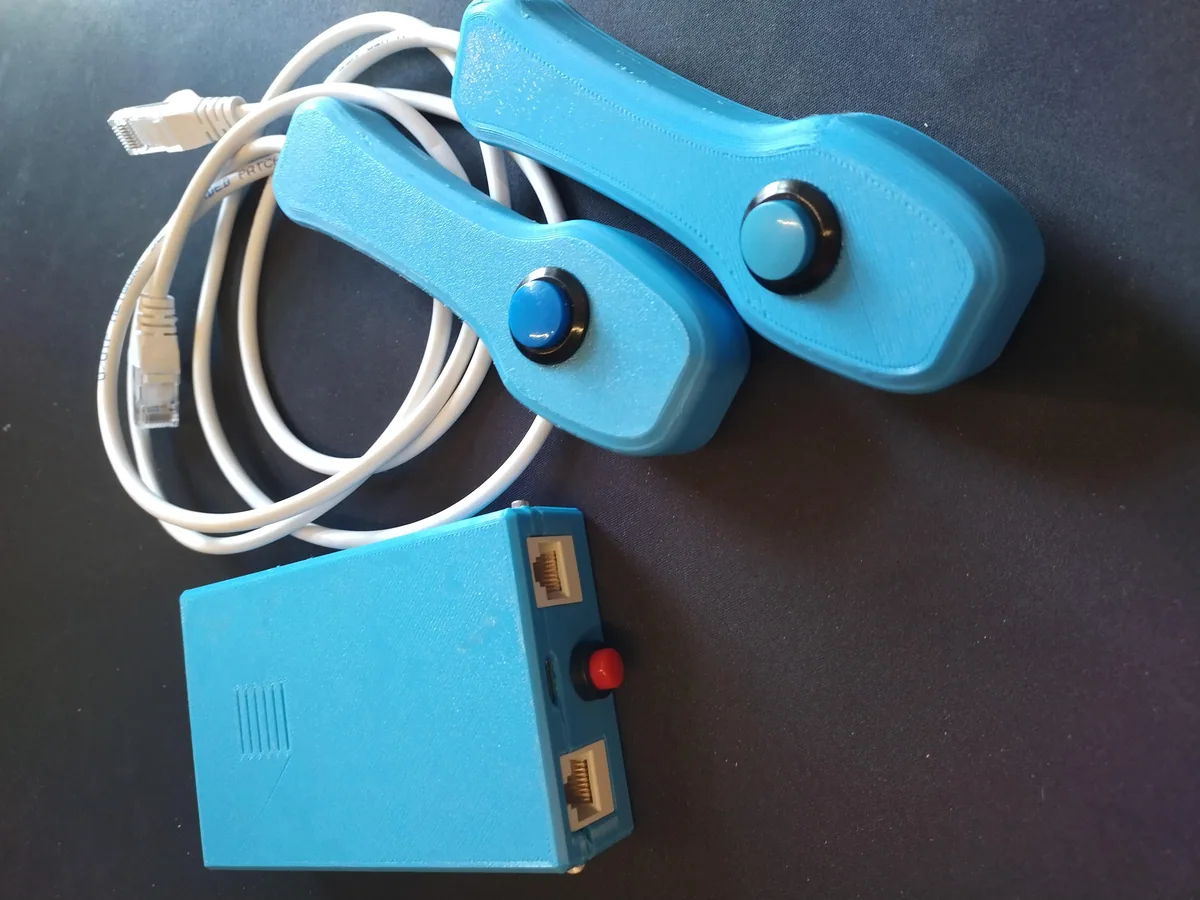
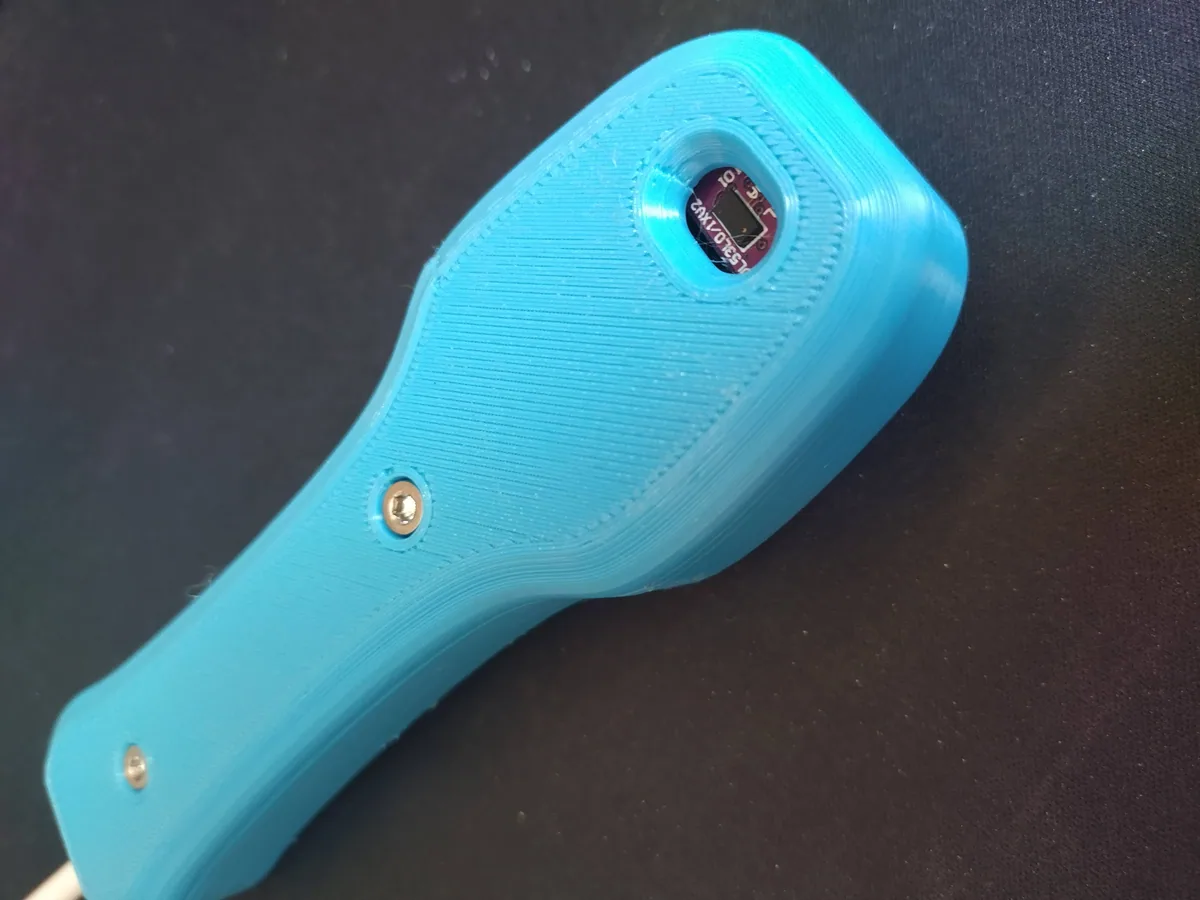
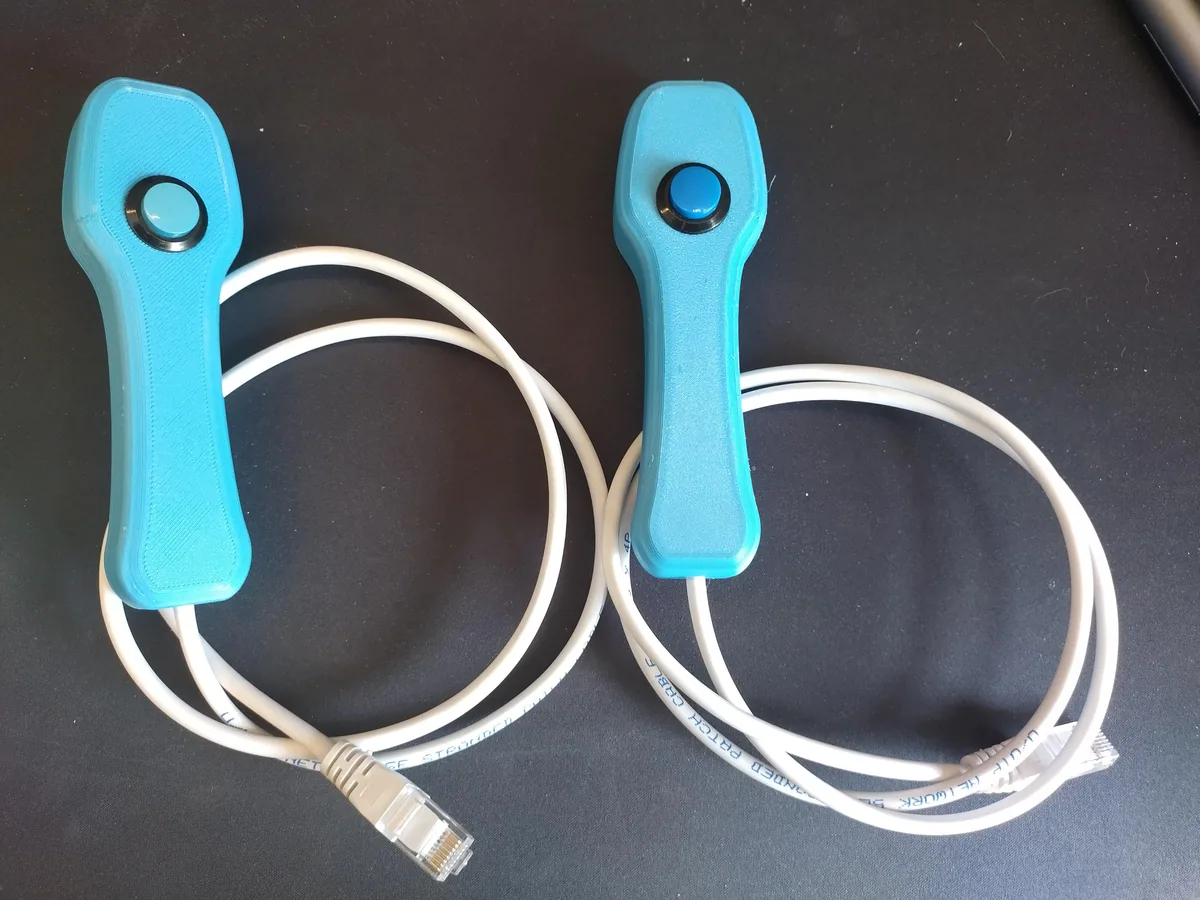
A theremin is played by moving your hands near two antennas: one controls pitch, the other volume. The Wearemin takes the same idea and makes it portable. Each hand holds a printed controller with a cheap laser range finder pointing down. Raise or lower one to sweep the pitch over several octaves, and the other to set the volume. Thumb buttons add a stepped-note mode, which jumps between notes like a finger across piano keys, and an instant mute. Sound goes out to any Bluetooth speaker or headphones.
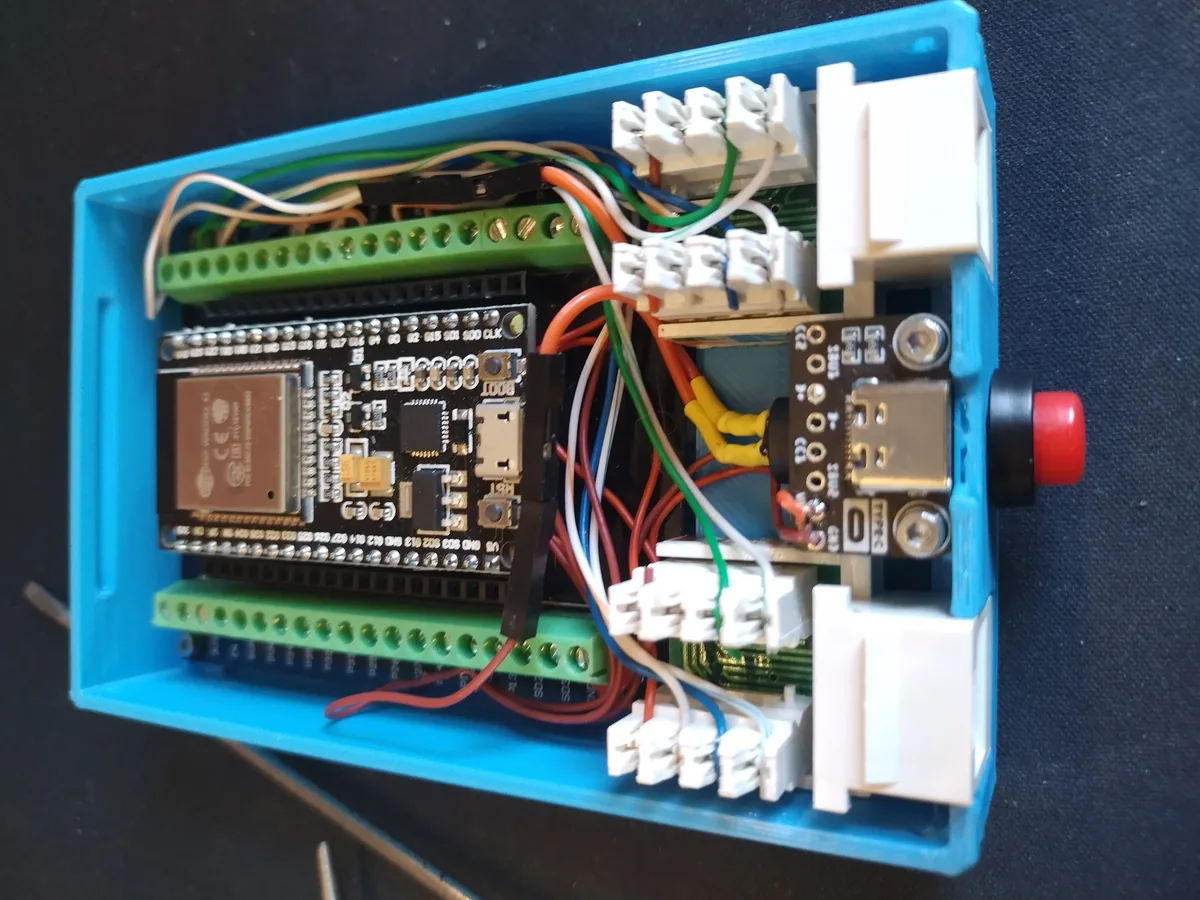
A central box holding the ESP32 links to the controllers by Ethernet cable, a cheap and tidy way to carry several wires. A programming mode lets you set the near and far points of each controller's range, so you can play standing, at a table or against a wall. The code builds on example code for the sensor and on an open-source ESP32 Bluetooth-audio library.
Safety. The designer notes that the lasers are low-power and unfocused, so they're considered eye-safe, but suggests checking for yourself.
Who it's for. Electronics hobbyists who are happy to solder a little and flash an ESP32. The designer used breakout boards and DuPont connectors to keep soldering minimal. In the demo video below, the designer jokes about its production quality, but it shows how the instrument plays.
What you'll need
Printed parts
- 2 × handheld controller (top, base, cable clip)
- Central control box base and lid
Bought parts
- ESP32 development board and an ESP32 breakout board
- 2 × VL53L0X time-of-flight sensors (the VL53L1X fits but wasn't made reliable)
- 2 × 16 mm momentary buttons and a 10 mm latching button
- 2 × RJ45 keystone jacks, a USB-C breakout and a couple of metres of Ethernet patch cable
- 14 × M2 screws (about 5 mm) and 8 × M3 screws (about 10 mm)
- A USB power source or battery pack
- A Bluetooth speaker or headphones
Tools
- Soldering iron
- Optional: DuPont crimper and heat-shrink
- A computer to flash the ESP32
Build overview
- Print the parts. 20% infill and 0.2 mm layers are fine.
- Wire the controllers. Cut an Ethernet lead to leave one plug, strip the end, and wire the sensor and thumb button (the designer gives a colour-by-colour map).
- Build the control box. Fit the ESP32, breakouts, RJ45 jacks and latching button.
- Flash the code. Get it from the GitHub repository linked below.
- Pair and calibrate. Put a Bluetooth speaker in pairing mode, then use programming mode to set each controller's range.
Print settings
- Infill: 20%
- Layer height: 0.2 mm
Video
 Play video: Wearemin - A Bluetooth Wearable Theremin-like-instrument (loads YouTube)
Nothing loads from YouTube until you press play. Video thumbnails are © their creators.
Photos
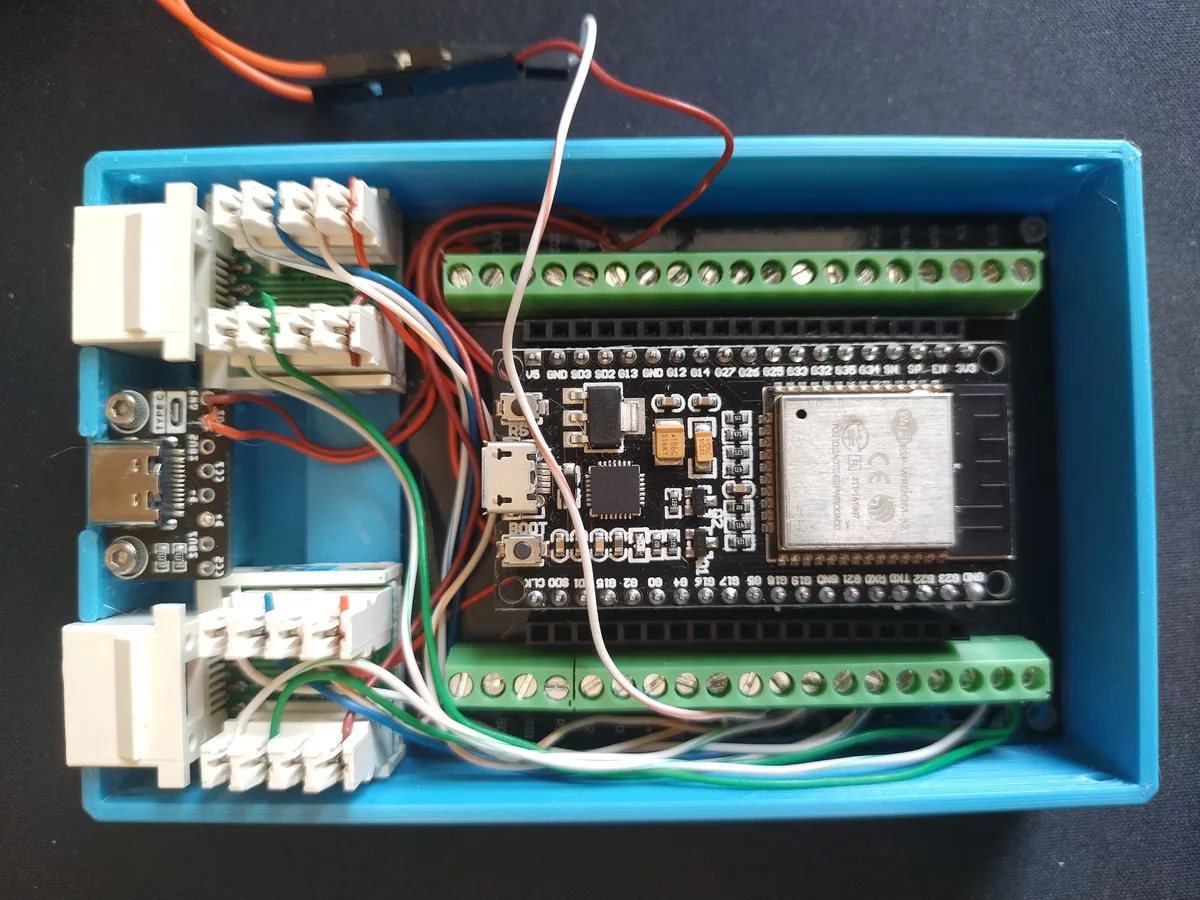
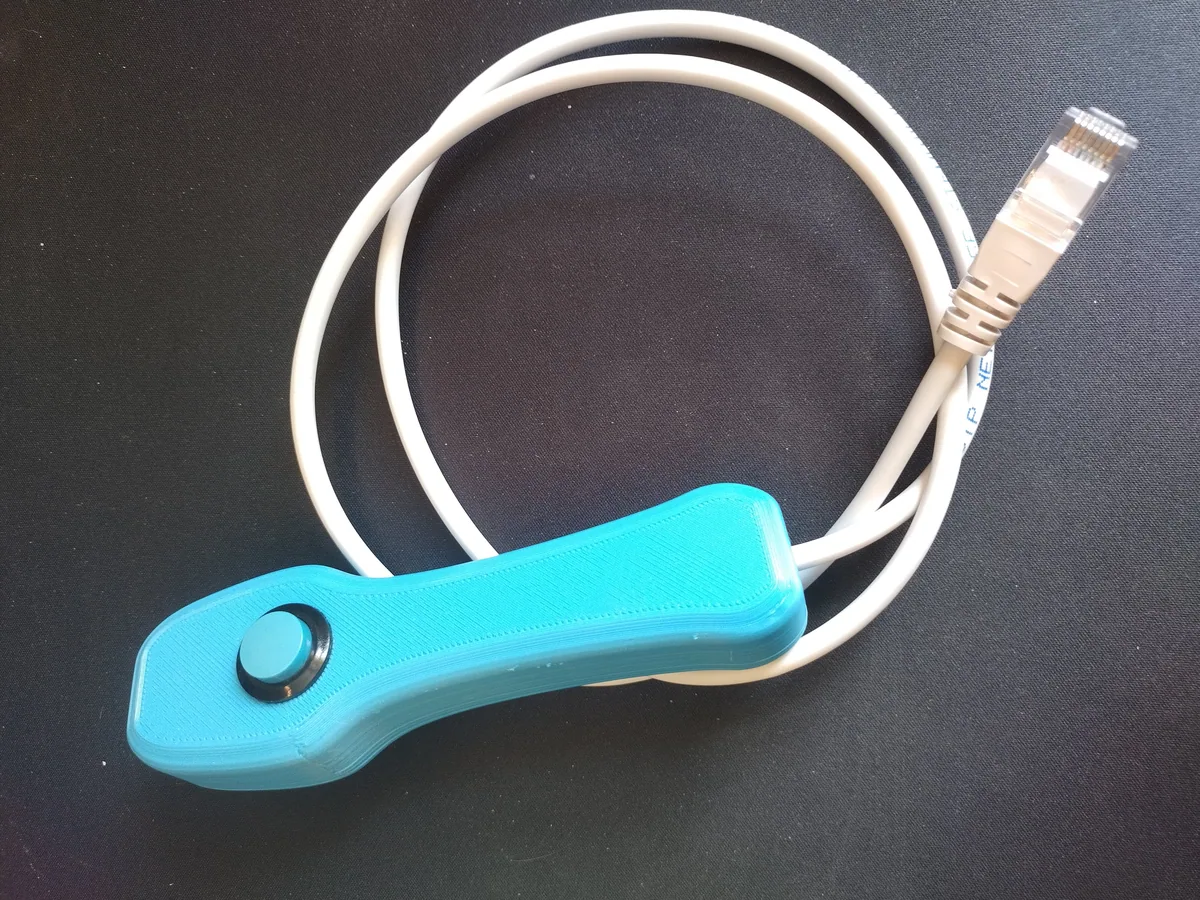
All photos: Rob, from the design page on Printables, licensed CC BY-SA. We resized them and converted them to WebP. These adapted versions are shared under the same licence.
6 more photos on Printables ↗