
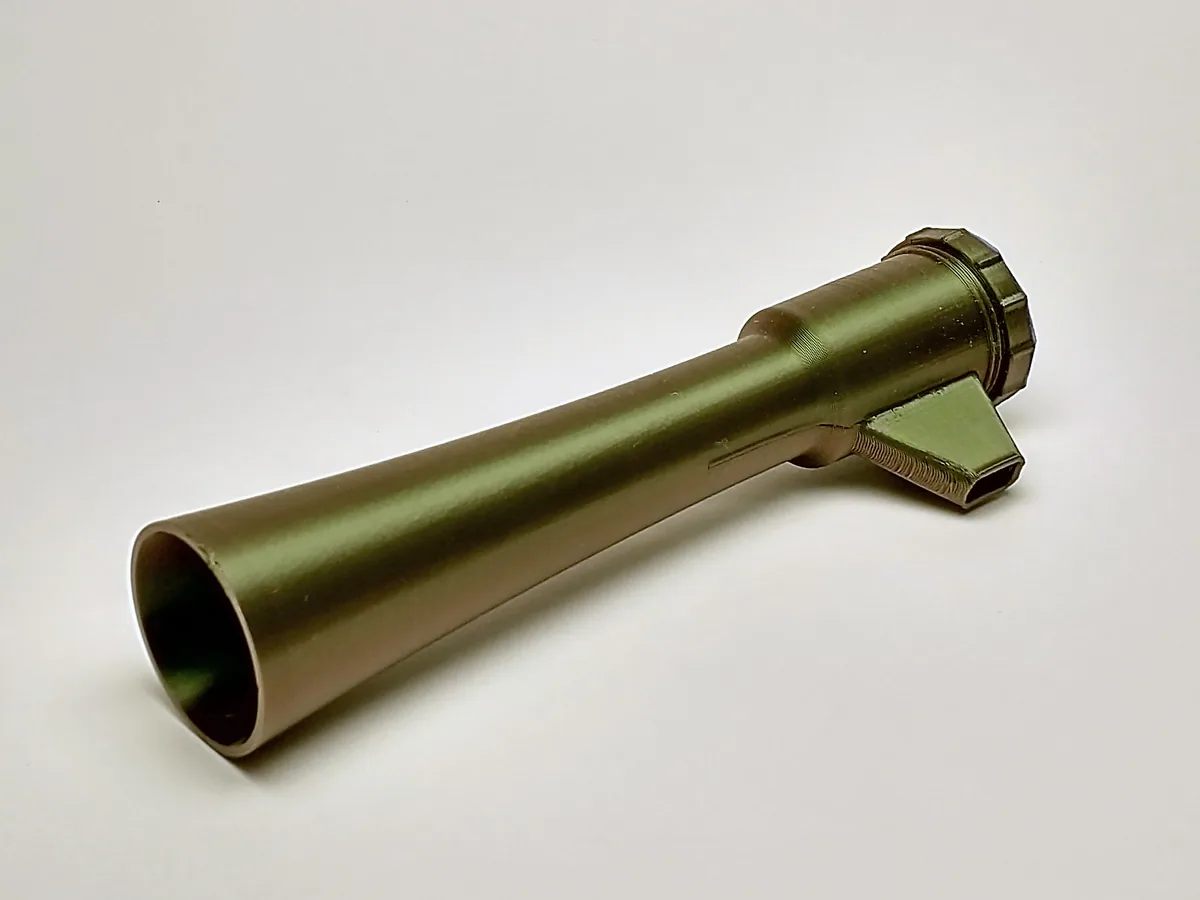
About the Membrane Bugle
This 'goofy little instrument', in its designer's words, is kind of a bugle that's easy on the lips. Rather than changing notes with your lips, you change the tension of a membrane. The horn has a membrane stretched over its narrow end, inside a concentric tube you blow into. Air pressure pushes the membrane out, the air escapes over the inner rim into the horn, and the membrane vibrates. It was inspired by Fabien T.'s PVC Membrane Clarinet (also in the library), which in turn credits the membrane-reed concept's originator, whose video is linked below.
On the clarinet, the tube length sets the note. Here the flared horn resonates at whatever frequency the membrane vibrates at, so screwing the threaded ring tighter raises the pitch and loosening it lowers it. For the membrane, use cut-open balloon or a latex or nitrile glove; a glove lies flatter.
To assemble, tape the membrane flat and run a thin bead of superglue on the ring's smooth-inside end. Press it onto the membrane, trim flush once it's dry, then screw the ring onto the horn. The designer's video shows it played.
What you'll need
Printed parts
- Horn with blow tube
- Threaded membrane ring
Bought parts
- A balloon or a latex or nitrile glove
- Superglue (cyanoacrylate)
Tools
- Scissors
- Tape
Build overview
- Print. PLA at 0.2 mm or finer, so the threads come out cleanly.
- Prepare the membrane. Tape the membrane flat on a table.
- Glue the ring. Superglue the ring's smooth-inside end and press it onto the membrane.
- Trim. When dry, trim the membrane flush.
- Fit and tune. Screw the ring onto the horn; tighter raises the pitch.
Print settings
- Material: PLA
- Layer height: 0.2 mm (fine enough for the threads)
Video
 Play video: Membrane Bugle (loads YouTube)
Nothing loads from YouTube until you press play. Video thumbnails are © their creators.
How to build the membrane clarinet (the membrane-reed concept, YouTube) background, not this design
Photos
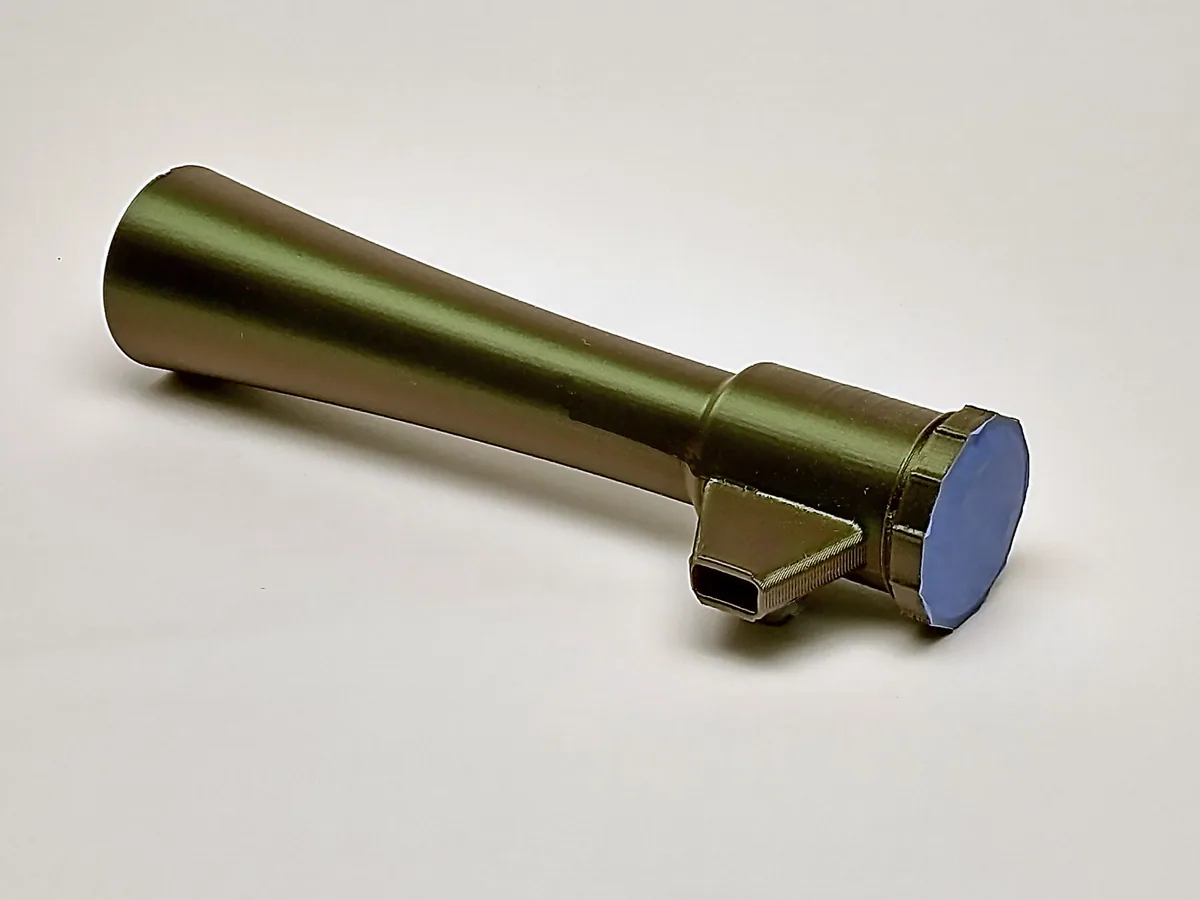
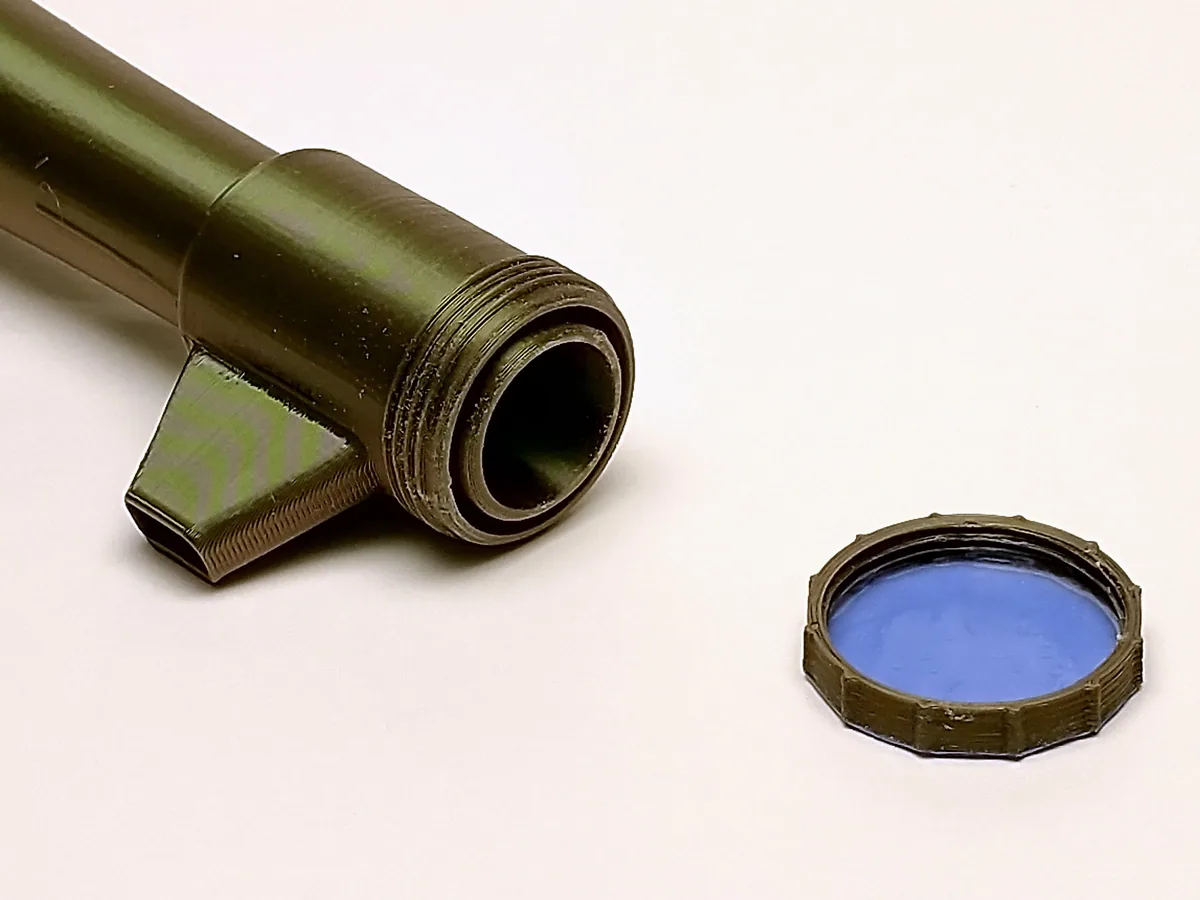
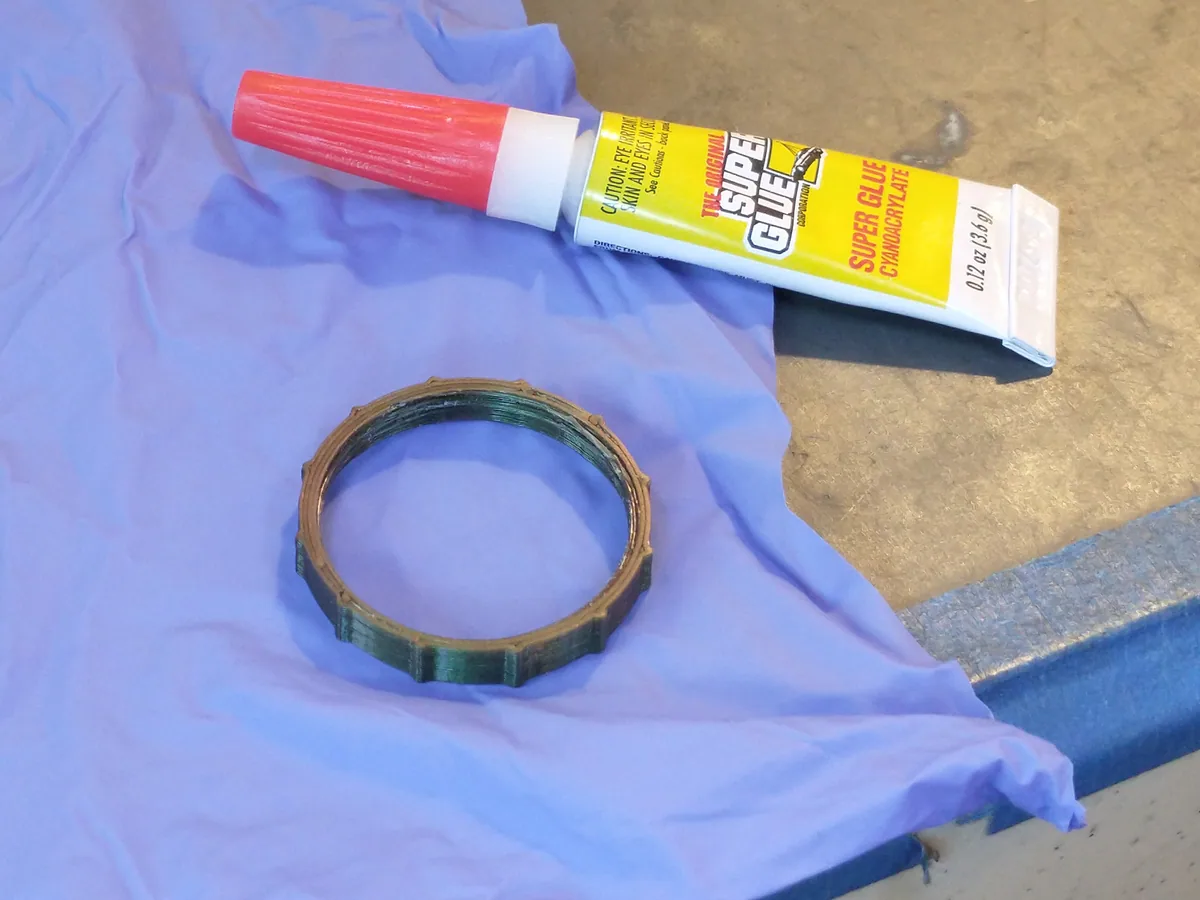
All photos: LoboCNC, from the design page on Printables, licensed CC BY-SA. We resized them and converted them to WebP. These adapted versions are shared under the same licence.