
About the Irish Flute
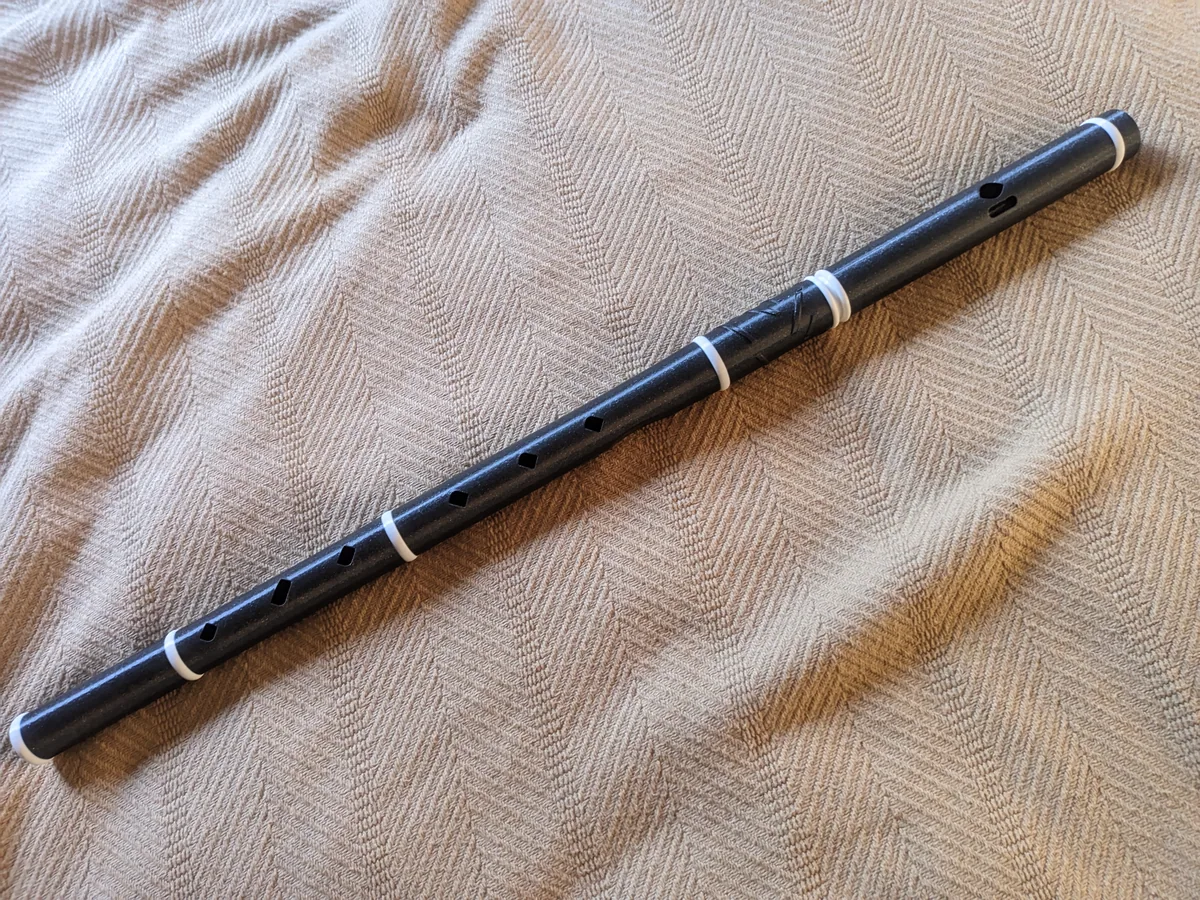
An Irish (simple-system) flute in D with six open finger holes and no keys. It's based on historical flutes by Marat Axianoff, a flute maker experienced in repairing antique flutes, and Marina Tiik. Axianoff's aim was an instrument that needs no post-processing apart from winding the joints. This Printables page is a re-upload by another maker, with detailed printing and playing notes. Credit for the design belongs to Axianoff and Tiik, who accept donations through a link on that page.
The uploader found the intonation good enough to play along with other flutes in online videos, and thought it sounded like a wooden flute. He could play D and G major scales after a day. Print it in PLA at 100% infill. Denser nylon or PETG could work, but you'd need to clean up the bores. No supports are needed in the supplied orientation, though a brim helps. Check where the seams fall, especially near the hand cut-outs. Colour changes for the decorative rings are included in the 3MF files, and mirroring every part makes a left-handed flute.
Assemble head, barrel, middle (with its tenon superglued in) and foot. Air leaks ruin a flute, so the joints are sealed the traditional way, by winding thread round them. The uploader recommends embroidery floss with cork grease, wound tight, which makes a big difference to the low notes. A flute teacher's lapping demonstration is linked below. The recording shows a piper playing reels on one.
What you'll need
Printed parts
- Head, barrel, tenon, middle and foot
Bought parts
- Embroidery floss (or other thread) for winding the joints
- Cork grease
- Superglue (for the tenon)
Tools
- A printer able to print solid PLA cleanly
Build overview
- Print. Print in PLA at 100% infill and 0.2 mm layers, in the supplied orientation, with a brim and no supports.
- Clean the bores. Remove any stringing without changing the bore shape.
- Glue the tenon. Superglue the tenon into the middle section.
- Wind the joints. Lap each joint tightly with floss and cork grease.
- Assemble and play. Fit head, barrel, middle and foot, then align the holes and play.
Print settings
- Material: PLA (nylon or PETG need bore clean-up)
- Infill: 100%
- Layer height: 0.2 mm
- Supports: None in the supplied orientation; add a brim
- Seams: Check placement, especially near the hand cut-outs
Video
 Play video: Reels played on a 3D-printed Irish flute (loads YouTube)
Nothing loads from YouTube until you press play. Video thumbnails are © their creators.
Thread joint lapping demonstration (YouTube) a flute teacher's technique video, not this design
Photos

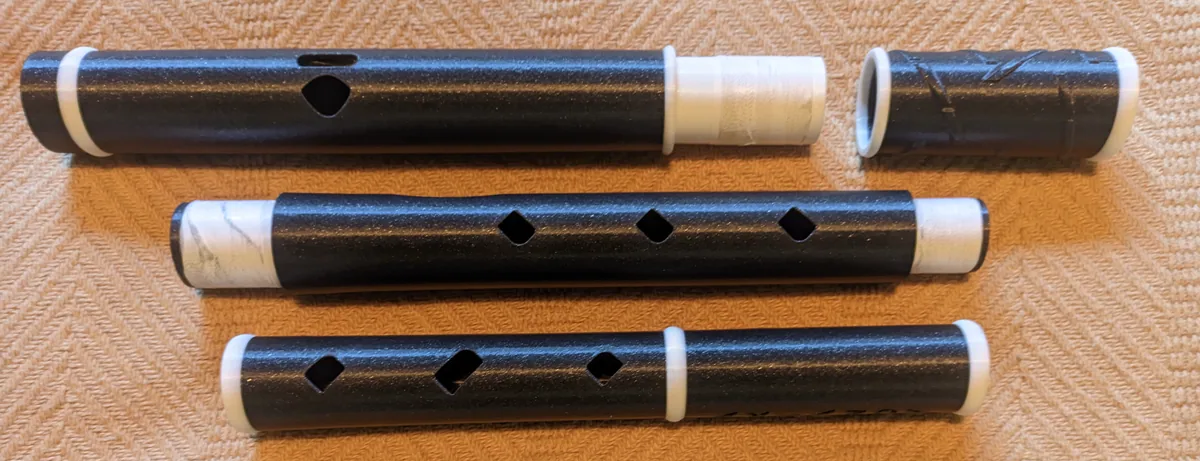
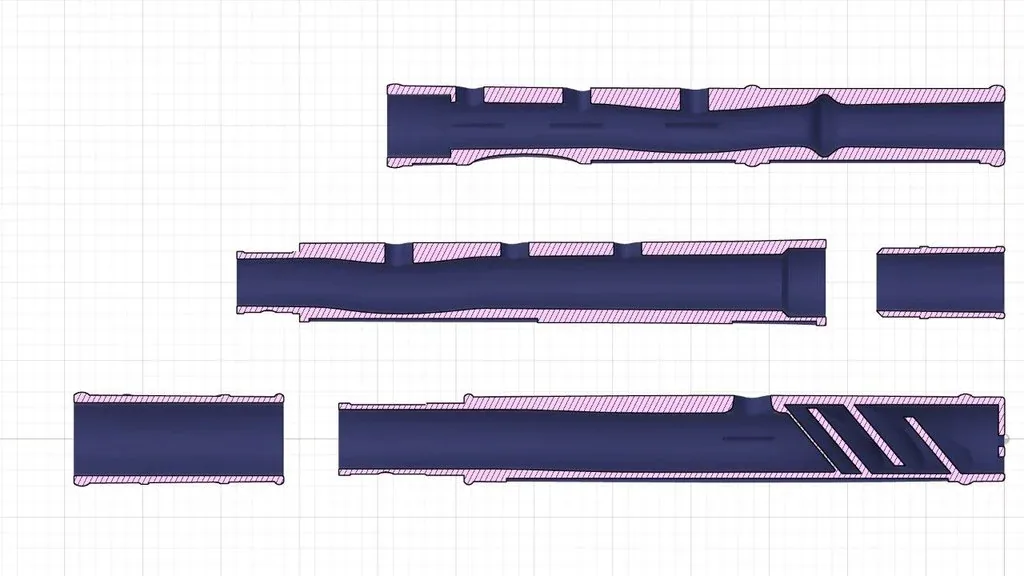
All photos: neale, from the design page on Printables, licensed CC BY-SA. We resized them and converted them to WebP. These adapted versions are shared under the same licence.